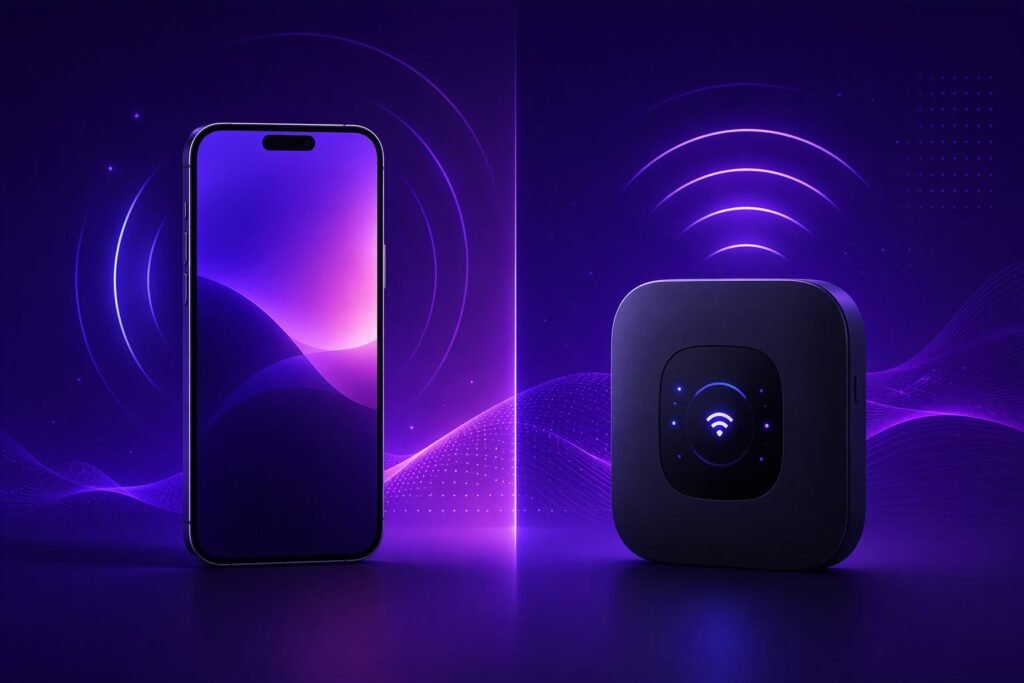
Du keliai į internetą užsienyje
Prieš eSIM erą keliautojai rinkdavosi kišeninius WiFi routerius (dar vadinamus „pocket WiFi” ar „mifi”) — mažus įrenginius, kurie dalina mobilų internetą keliems prietaisams. Jie vis dar teikiami oro uostuose ir nuomos punktuose. Bet ar jie vis dar prasmingi?
Kišeninio WiFi minusai
- Papildomas įrenginys — dar vienas daiktas, kurį reikia nešiotis, krauti ir neprarasti.
- Nuoma brangi — tipiškai 5–10 € per dieną, plius užstatas 100–200 €.
- Baterija — routeris išsikrauna per 6–10 valandų, o krautuvėlis sveria.
- Grąžinimas — vėluojant grąžinti skaičiuojamos baudos.
- Nuolaidų nėra — kainos fiksuotos, net jei naudojate mažai.
Kur eSIM laimi
- Nieko papildomo nešiotis — internetas jau jūsų telefone.
- Kaina — planas savaitei kainuoja tiek, kiek viena routerio nuomos diena.
- Baterija — telefonas kraunamas kaip visada, antro įrenginio nėra.
- Diegimas per 5 minutes — be eilių oro uoste, be užstatų ir sutarčių.
Kada kišeninis WiFi vis dar turi prasmę
- Grupė su 5+ prietaisų — jei keliauja didelė šeima ar komanda, routeris gali būti pigesnis vienam centrui.
- Senoviniai telefonai be eSIM — jei telefonas eSIM nepalaiko, routeris lieka alternatyva.
- Kompai ir planšetės be SIM — nors telefonas gali dalinti „hotspot”, routeris taupo telefono bateriją.
Praktiškai: telefonas su eSIM ir įjungtu „Personal Hotspot” 90% atvejų pakeičia routerį — tik sekit bateriją ir duomenų likutį.
Išvada
Vienam ar dviem žmonėms eSIM pranašesnis beveik visais atžvilgiais: pigiau, lengviau, be papildomų įrenginių. Palyginkite planus 200+ šalių ir įsitikinkite — kainos prasideda nuo kelių eurų.
Two ways to get internet abroad
Before the eSIM era, travellers relied on pocket WiFi routers — small gadgets that share mobile internet with several devices. They are still rented out at airports. But do they still make sense?
The downsides of pocket WiFi
- An extra device — one more thing to carry, charge and not lose.
- Rental is pricey — typically 5–10 EUR per day, plus a 100–200 EUR deposit.
- Battery — the router dies in 6–10 hours, and the charger adds weight.
- Returns — late returns mean penalty fees.
- No flexibility — fixed pricing even if you barely use it.
Where an eSIM wins
- Nothing extra to carry — the internet is already in your phone.
- Price — a week-long plan costs about one day of router rental.
- Battery — charge your phone as usual, no second device.
- 5-minute setup — no airport queues, no deposits, no contracts.
When pocket WiFi still makes sense
- A group with 5+ devices — for a big family or team, one shared router can be cheaper.
- Old phones without eSIM — if your phone lacks eSIM support, a router remains the fallback.
- Laptops and tablets without SIM — although a phone can share a hotspot, a router spares the phone battery.
In practice: a phone with an eSIM and Personal Hotspot enabled replaces a router in 90% of cases — just keep an eye on battery and data balance.
Verdict
For one or two people, an eSIM is superior on almost every count: cheaper, lighter, no extra gadgets. Compare plans for 200+ countries — prices start from a few euros.